Dry Yards & Solid Foundations
Expert drainage systems and site grading to protect your home from water damage and erosion in Valdosta.
Water Always Wins… Unless You Give It a Path
In South Georgia, heavy storms drop massive amounts of water in minutes. If that water doesn’t have a clear path away from your home, it pools against your foundation, floods your crawlspace, and turns your lawn into a mud pit.
At Quality Outdoors, we solve water problems from the ground up. Whether you need to reshape the land (grading) or install underground pipes (drainage), we design systems that handle the heaviest downpours.
GRADING
Precision Grading and Surface Management
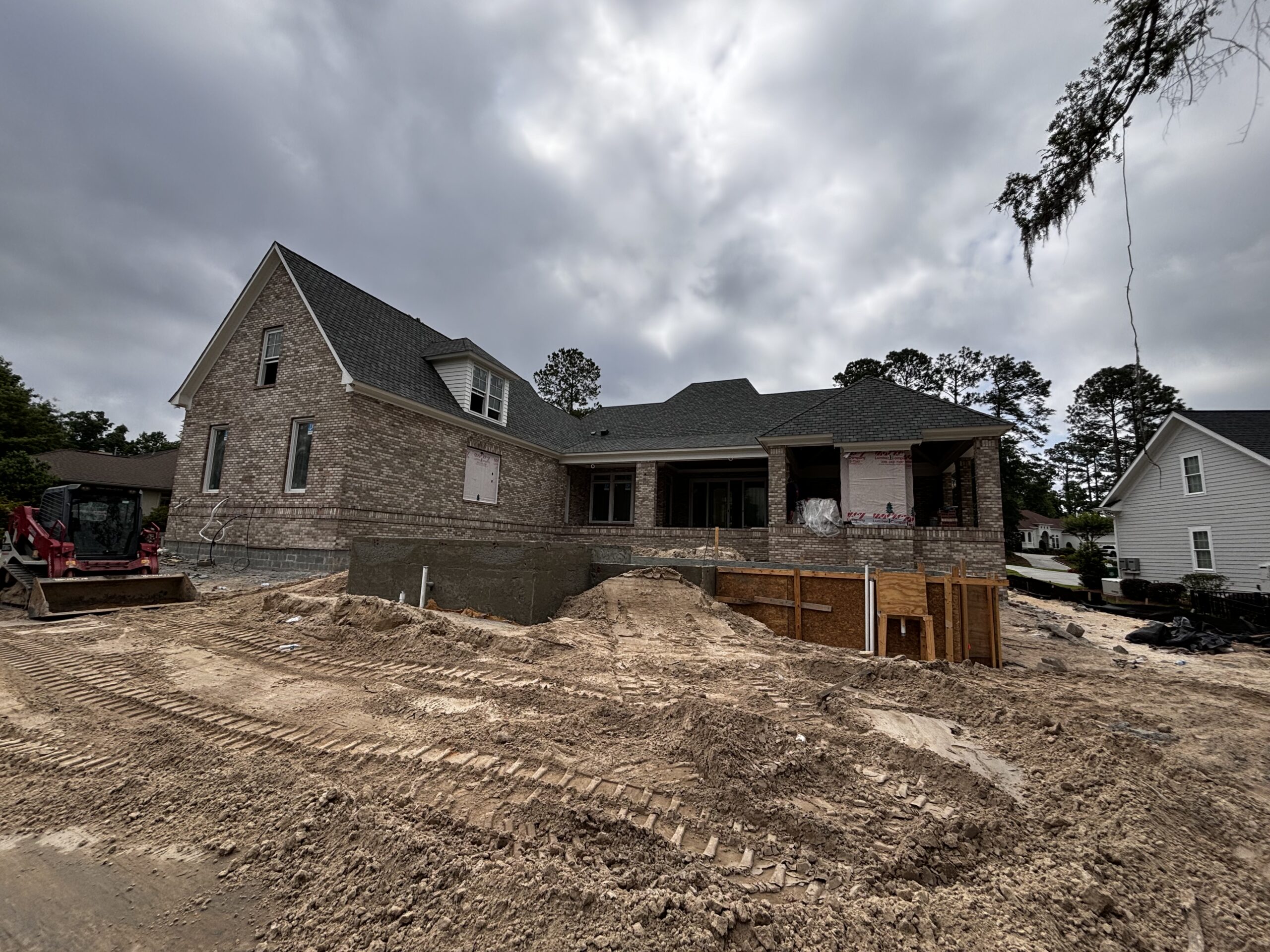
The best drainage system is gravity. If the ground slopes toward your house, no amount of pipe will save you. This is called “negative drainage.” It directs water straight into your foundation walls.
We establish “positive drainage.” We use heavy equipment and laser levels to reshape the earth
Grading is not just about foundations. It is about a usable lawn.
We also fix:
-
Bumpy Lawns: smoothing out ruts for easier mowing.
-
Low Spots: Filling in depressions that hold water.
-
New Construction: Final grading before sod installation.
ENGINEERED DRAINAGE SYSTEMS
Underground Solutions for Surface Water
Sometimes, grading isn’t enough. If your yard is flat, or if you are at the bottom of a hill, you need mechanical help. We install engineered pipe systems to move water rapidly.
French Drains (Sub-Surface Water)
A French Drain is designed for water that is already underground. It is a perforated pipe buried in a trench. We surround the pipe with clean gravel and wrap it in geotextile fabric.
-
How it works: The gravel creates a path of least resistance. Groundwater flows into the gravel, enters the pipe, and flows away.
-
Best for: Drying out soggy, squishy lawns where you sink into the mud.
Catch Basins (Surface Water)
A catch basin is a box with a grate on top. We install these in the lowest parts of your yard.
-
How it works: During a storm, water rushing across the grass falls into the basin. A solid pipe connects the basin to a discharge point far away.
-
Best for: Preventing “lakes” from forming during a thunderstorm.
Downspout Extensions
Your roof collects thousands of gallons of water. Your gutters dump all of that water right next to your foundation. This is a major cause of structural damage.
-
The Fix: We connect your downspouts to solid PVC pipes buried underground. We run them 20+ feet away from the house to a safe exit point.
THE DANGER OF HYDROSTATIC PRESSURE
Why You Cannot Ignore Drainage Issues
Ignoring a wet yard is expensive. The real damage happens where you cannot see it.
Foundation Failure
When soil gets wet, it gets heavy. This heavy, wet soil pushes against your basement or crawlspace walls. This force is called “hydrostatic pressure.” Over time, this pressure cracks the masonry. It causes walls to bow inward. Repairing a foundation costs tens of thousands of dollars. Installing a drainage system costs a fraction of that.
Erosion and Topsoil Loss
Water moving across bare dirt acts like sandpaper. It strips away your topsoil. It exposes tree roots. It washes away your fertilizer. Proper drainage slows the water down. It controls the flow. This keeps your soil, and your money on your property.
EROSION CONTROL
Dry Creek Beds & Swales
Sometimes, we need to manage water flow on the surface. We can do this beautifully.
Dry Creek Beds
We excavate a channel in your yard. We line it with river rock and boulders. Most of the time, it looks like a decorative garden feature. However, when it rains, it acts as a canal. It directs high-volume water safely to the street or a storm drain. It prevents the water from cutting deep ruts in your lawn.
Vegetated Swales
A swale is a shallow, wide ditch. We plant it with water-loving grass. It gently guides water across the property. Because it is wide and shallow, you can still mow over it. It is an invisible drainage solution.
OUR PROCESS
How We Fix Your Water Problem
Step 1: The Site Analysis
We come to your home during or after a rain event if possible. We look for standing water. We identify the source. Is it roof runoff? Is it a neighbor’s yard draining onto yours?
Step 2: The Laser Survey
We use transit levels to measure the elevation. We need to know exactly how much “fall” (slope) we have to work with. Water won’t flow uphill. We calculate the physics before we dig.
Step 3: Excavation and Installation
We use trenchers and mini-excavators. We dig the lines. We install the pipe. We verify the slope.
Step 4: Testing and Restoration
We test the system with water. We ensure it flows correctly. Then, we backfill the trenches. We compact the soil. We re-sod the area. When we leave, your yard looks clean.
FREQUENTLY ASKED QUESTIONS
Common Questions About Drainage
Will a French Drain work for surface puddles?
Not efficiently. French Drains are for groundwater (soggy soil). For standing surface puddles, a Catch Basin is much faster. We often combine both systems for maximum protection.
My crawlspace is damp. Will grading help?
Yes. Grading is the first step. If we stop water from flowing toward the house, the crawlspace often dries out on its own.
Do you use corrugated black pipe or solid PVC?
For downspout extensions, we prefer solid PVC. It is stronger. It does not crush under the weight of a mower. It does not clog as easily as the ribbed black pipe.
Can you fix the drainage without ruining my grass?
We have to dig. However, we cut the sod carefully. We place it on tarps. Once the pipe is in, we replace the sod. There will be a seam, but the grass usually recovers within a few weeks.
Don’t Wait for the Next Storm
Water damage is progressive. It gets worse with every rain. Protect your biggest investment. Let Quality Outdoors design a system that keeps your yard dry and your foundation solid.