Reclaim Your Property
Engineered retaining wall systems designed to stop erosion, manage water, and create flat, usable yard space.
Is your backyard disappearing? In South Georgia, heavy rains wash away topsoil. Sloped yards are useless for playing or entertaining. Uneven terrain threatens your home’s foundation. At Quality Outdoors, we do not just stack stones. We engineer solutions. A retaining wall is a structural system. It must hold back tons of soil pressure. We build walls that level steep slopes. We build walls that prevent washout. We build walls that stand the test of time.
The Core Problem
More Than Just a Stack of Blocks
The Silent Killer: Hydrostatic Pressure Most retaining walls fail for one reason: water. When it rains, the soil behind the wall gets heavy. This is called hydrostatic pressure. If that water cannot escape, it pushes against the wall. Eventually, the wall bulges and collapses.
The Quality Outdoors Solution
We understand physics. We understand drainage. We build our walls to manage this pressure. We do not just build a barrier; we build a drainage system. Every wall we install includes a complex system of gravel and pipes hidden behind the face. This ensures water flows through and around the wall, not against it.
FUNCTIONAL BENEFITS
Turn Slopes into Usable Space
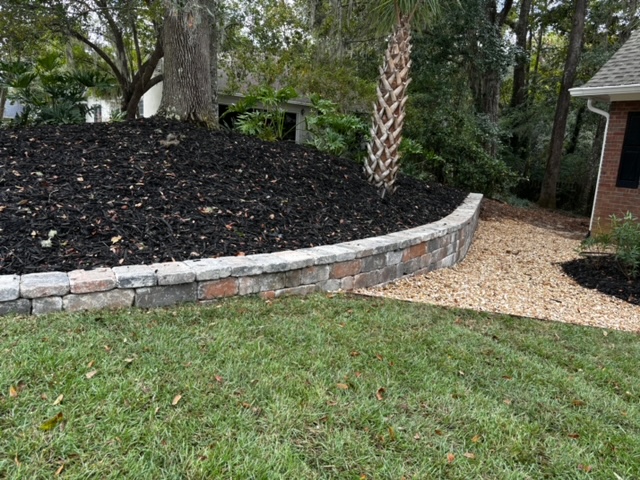
Is a hill in your backyard making half your property unusable? You are paying taxes on that land. You should be able to use it. We specialize in “cut and fill” retaining walls. We cut into the slope. We install a wall. Suddenly, a steep hill becomes a flat lawn.
Support for Hardscapes: We build walls that support heavy loads.
-
Driveways: Prevent your driveway from sliding downhill.
-
Pool Decks: Create a level surface for a pool on a sloped lot.
-
Garden Beds: Create tiered terraces for planting.
DESIGN & AESTHETICS
Seating Walls & Garden Borders
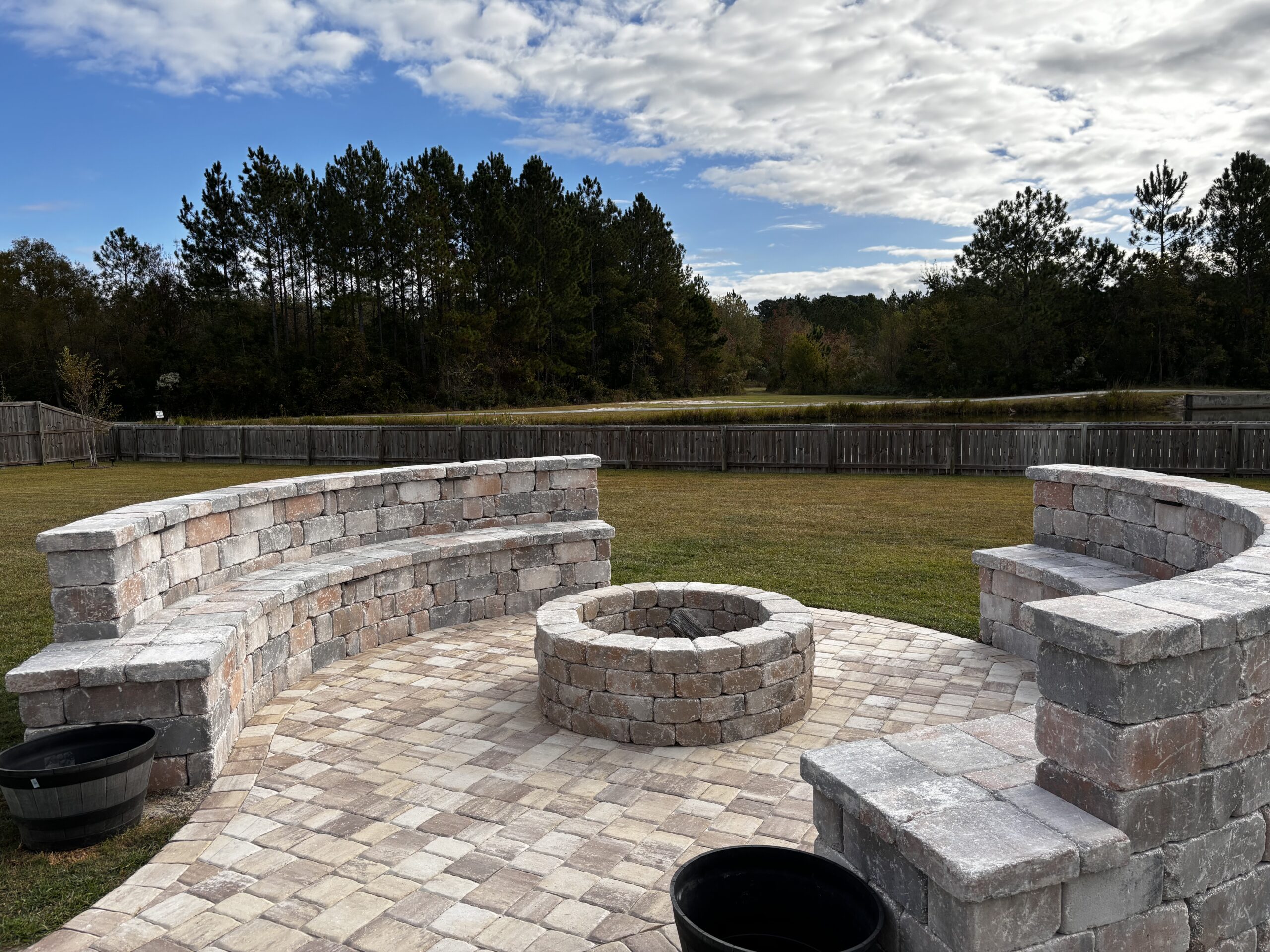
Not all walls are for holding back hills. Freestanding and seating walls are a beautiful way to define outdoor rooms.
We often integrate low walls (18-24 inches high) around patios and fire pits. These serve a dual purpose. They create a clear visual boundary for your entertainment space and provide permanent, built-in seating for guests so you don’t have to clutter your patio with extra chairs.
Grand Steps & Staircases
When you have changes in elevation, you need a safe way to move between them. We design custom hardscape steps that integrate seamlessly into your retaining walls.
From grand stone staircases leading to a lower patio to simple block steps for side-yard access, we ensure every tread is level, stable, and properly lit for safety.
Material Selection
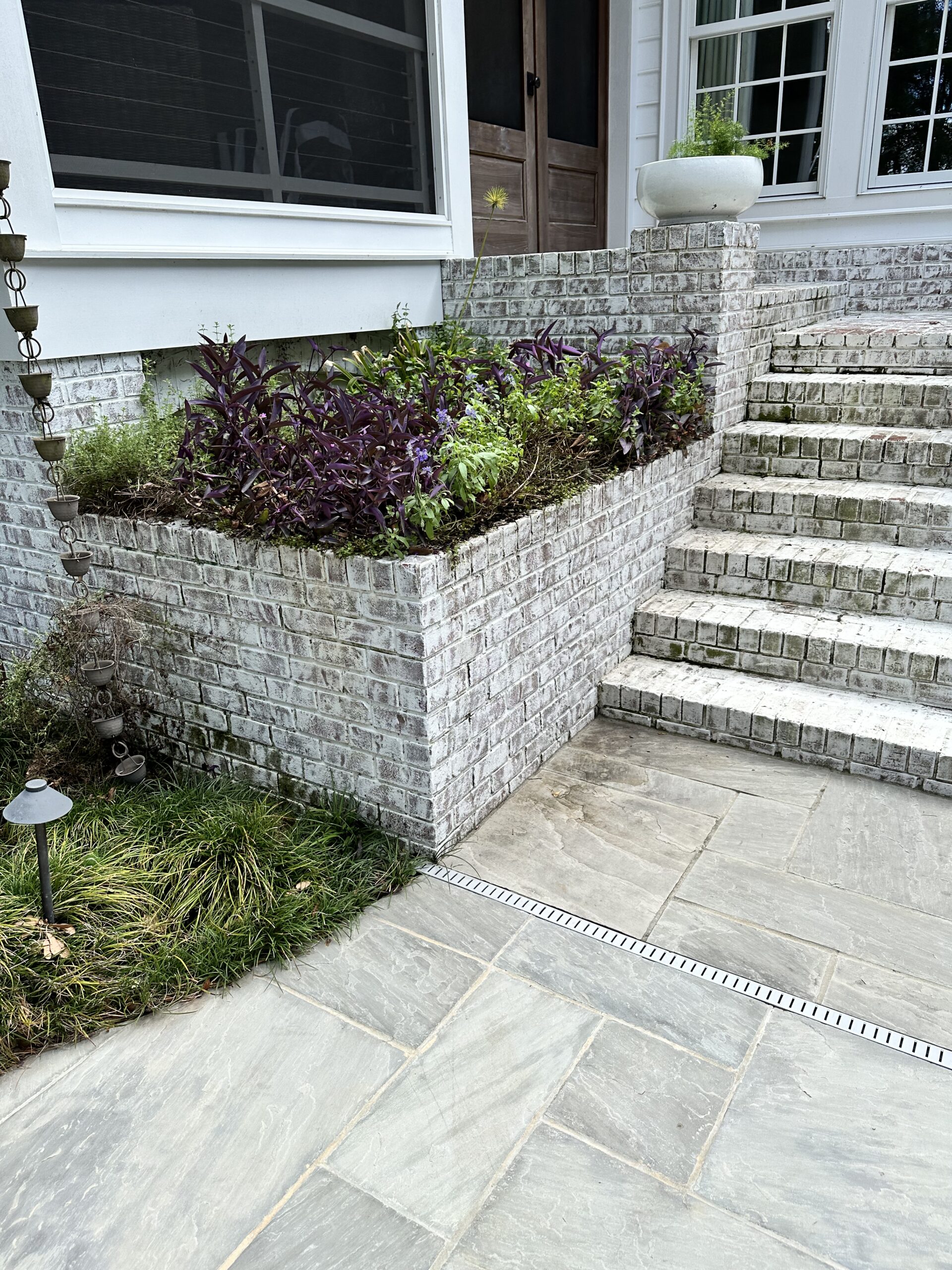
Segmental Retaining Wall (SRW) Blocks
These are engineered concrete blocks. They interlock with pins or lips.
-
Pros: Extremely durable, rot-proof, and designed for tall walls.
-
Look: Clean, modern, and available in many colors.
Natural Stone Boulders
We stack large, natural rocks.
-
Pros: Natural look that blends with the landscape.
-
Look: Rustic and organic. Great for garden borders.
Pressure-Treated Timber
We use heavy 6×6 timbers.
-
Pros: Cost-effective and easier to install.
-
Cons: They will eventually rot (15-20 years). We generally recommend block for long-term value.
OUR ENGINEERING PROCESS
Why Our Walls Don’t Fail
We follow a strict installation standard. We do not cut corners on what you cannot see.
Step 1: The Deep Aggregate Footing
You cannot build a wall on dirt. It will sink. We dig a trench. We fill it with crushed stone. We compact it. This creates a solid, non-shifting foundation for the first course of block.
Step 2: The Drainage Zone
We install at least 12 inches of clean gravel directly behind the wall. Gravel does not hold water. It allows water to drop quickly to the bottom of the trench.
Step 3: Weep Holes and Pipes
At the bottom of the gravel zone, we place a perforated drain pipe. This collects the water. It channels the water out and away from the structure. We also install weep holes in the face of the wall to release pressure.
Step 4: Geogrid Reinforcement
This is critical for walls over 4 feet high. We install “Geogrid.” It looks like a heavy plastic net. We bury sheets of this net into the soil behind the wall. The soil sits on the net. The net connects to the block. This anchors the wall deep into the hill. The weight of the earth actually holds the wall up.
Frequently Asked Questions
Common Questions About Retaining Walls
Do I need a permit?
In many areas, walls over 4 feet require a permit and an engineer’s stamp. We handle this process. We ensure your wall is legal and safe.
My existing wall is leaning. Can you fix it?
Usually, no. If a wall is leaning, the drainage has failed. The base has likely shifted. It is often cheaper and safer to tear it down and rebuild it correctly than to try to “push” it back.
How long will a block wall last?
A concrete block wall is permanent. It does not rot. It does not rust. With proper drainage, it will outlast the house.
Can you build a curved wall?
Yes. SRW blocks are designed to create smooth curves. We can follow the natural contours of your land.
Stop the Erosion. Start Using Your Yard.
Do not wait until your hillside collapses. Do not wait until your patio slides away. Contact the experts who understand the science of soil mechanics. Let us build a wall that protects your property and enhances its beauty.